Services Service AreasContact ๐Ÿ“ž 813-420-5873

Boat Oxidation Removal
Tampa Bay, FL

Reverse years of UV and saltwater damage. Restore faded, chalky gelcoat to a deep mirror finish โ€” at your dock, throughout Tampa Bay.

Get a Free Estimate Call 813-420-5873

Why Your Boat Looks Faded

Oxidation is the breakdown of your gelcoat's outer layer from UV radiation and oxygen. In Florida's climate, boats oxidize faster than almost anywhere in the country. Left untreated, it penetrates deeper โ€” eventually requiring full respray instead of restoration.

Signs of Oxidation

  • Dull, chalky, or hazy hull appearance
  • Faded color compared to when new
  • White powdery residue when you rub the surface
  • Wax no longer produces a shine
  • Rough texture rather than smooth gloss

Our Process

  • Decontamination wash and surface preparation
  • Surface correction using the appropriate method for each vessel โ€” dry sanding, wet sanding, compounding, polishing, or a combination depending on the severity and gelcoat condition
  • SiO2 polymer sealant (3โ€“6 month protection) or ceramic coating (2+ year protection) to seal and protect the restored surface
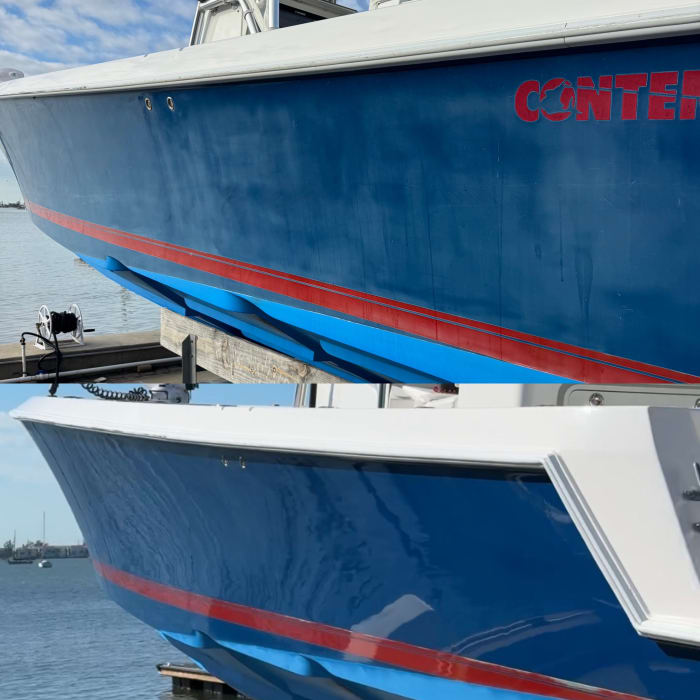
Boat oxidation removal process Tampa Bay FL

Oxidation Severity: Mild, Moderate & Heavy

Not all oxidation is the same. The severity determines what your gelcoat actually needs โ€” and a process that works on mild oxidation will leave moderate or heavy cases looking almost-right for about two weeks before fading back. Here's how to read what you're looking at.

Mild Oxidation

The hull looks slightly dull or hazy but still retains most of its color depth. You'll see light chalkiness when you rub the surface, but the gelcoat is intact. A two-step correction (compound + polish) typically restores full gloss. Most common on boats under five years old that have been neglected for a season or two.

Moderate Oxidation

Color has visibly faded and the surface feels rough to the touch. The chalky residue is heavy and transfers easily to a cloth. Buffing alone won't cut it โ€” compound work is required, and some sections may need light dry sanding before compounding. Florida's year-round UV makes moderate oxidation the most common scenario we see on boats that miss a full detail cycle.

Heavy Oxidation

The gelcoat is deeply discolored โ€” often gray, yellow, or chalky white โ€” with a textured or crazing pattern in the surface. Wet sanding is typically required to cut below the damage before compounding and polishing can restore clarity. This is a three- or four-step correction process. It takes longer and costs more, but it is still recoverable in most cases โ€” the alternative is a full gelcoat respray.

When you contact us for a quote, photos of the hull in direct light make a significant difference in accuracy. We'll tell you exactly which level of correction your boat needs โ€” no guessing, no upsell pressure.

How Oxidation Removal Actually Works

1

Assessment

We inspect the full hull in direct light, checking oxidation depth and consistency across all surfaces. Different sections โ€” hull, topside, transom โ€” often have different severity levels, which means they may require different correction steps. An honest assessment before any product touches the boat is what separates a lasting result from one that fades back in a month.

2

Wash & Decontamination

A full decontamination wash removes salt, biological growth, waterline deposits, and surface contamination. Correcting on top of a contaminated surface embeds that contamination into the gelcoat. This step isn't optional โ€” it determines whether the correction work that follows actually holds.

3

Compounding (and Wet Sanding if Required)

For moderate oxidation, machine compounding cuts away the damaged layer of gelcoat to expose the undamaged material below. For heavy oxidation, wet sanding is performed first โ€” this is the most aggressive step and requires precision to avoid removing too much material. Each section is worked to the correct depth before moving on.

4

Polishing

After compounding, the surface is polished to remove any remaining micro-scratches left by the compound and restore the deep, wet gloss of healthy gelcoat. This is the step most of the visible transformation comes from โ€” the hull goes from flat and hazy to mirror-clear.

5

Sealant or Ceramic Protection

Restored gelcoat with no protection is exposed gelcoat โ€” and Tampa Bay's UV will start working on it immediately. We apply either an SiO2 polymer sealant (3โ€“6 months of protection) or a full marine ceramic coating (2+ years) to seal and protect the work. Most clients doing a full restoration opt for ceramic at this stage โ€” it's the logical endpoint of the investment.

Oxidation Removal FAQ

Can heavy oxidation be fully removed?

In most cases, yes โ€” provided the gelcoat hasn't been worn too thin from previous correction work or years of neglect. Heavy oxidation requires wet sanding followed by compound and polish, which is a three- or four-step process. The result is typically a full restoration to gloss. The exception is gelcoat that has already been corrected multiple times and no longer has enough thickness to sand safely โ€” at that point, the honest answer is a respray, not a restoration. We'll tell you upfront if that's the situation.

How long does oxidation removal take?

It depends on vessel size and severity. A 25ft boat with moderate oxidation typically takes a full day โ€” 8 to 10 hours. A 35ft vessel with heavy oxidation on both hull and topside can take 12 to 16 hours, sometimes spread across two visits. Larger yachts are always multi-day jobs. We give you a time estimate with every quote so there are no surprises at your marina.

How much does oxidation removal cost?

Oxidation removal in the Tampa Bay market starts around $800โ€“$1,500 for vessels under 20ft and ranges up to $2,500โ€“$5,000+ for 40โ€“50ft yachts โ€” with vessels 50ft and above quoted individually. Pricing is driven by vessel size and the number of correction steps required: a two-step process (compound + polish) costs less than a four-step one (wet sand + compound + polish + refinement). We provide a written quote based on your specific boat and its condition before any work begins.

How do I keep oxidation from coming back?

Protection is everything. In Tampa Bay and across Florida, unprotected gelcoat begins oxidizing again within 12โ€“18 months โ€” the UV intensity here is among the most aggressive in the country. The most effective defense after a restoration is a marine ceramic coating, which provides 2+ years of UV and oxidation resistance. At minimum, a quality SiO2 polymer sealant applied every 3โ€“6 months will significantly slow the return. Regular wash and maintenance visits also matter โ€” salt accumulation accelerates surface degradation.

Oxidation Removal by City

We perform gelcoat oxidation removal dockside throughout Tampa Bay. Each market has distinct conditions โ€” Gulf salt exposure in Clearwater, inner bay biological growth in Tampa, full-sun wet slip patterns in St. Pete. Visit your city page for location-specific details.

St. Petersburg
Harborage ยท Maximo ยท Tierra Verde ยท Pinellas County
Oxidation Removal in St. Pete โ†’
Tampa
Davis Islands ยท Harbour Island ยท Apollo Beach ยท Hillsborough County
Oxidation Removal in Tampa โ†’
Clearwater
Clearwater Beach ยท Island Estates ยท Dunedin ยท Pinellas County
Oxidation Removal in Clearwater โ†’

You Just Restored Your Gelcoat.
Don't Let Florida Take It Back.

Without a protective barrier, oxidation returns. In Florida's UV and saltwater environment, untreated gelcoat begins to degrade again within 12โ€“18 months. Every client who goes through oxidation removal hears the same thing from Alex: protect the investment.

Ceramic coating creates a semi-permanent bond with your gelcoat โ€” a 2+ year shield against UV radiation, saltwater, and the elements that just did this damage in the first place. Compared to repeating this restoration annually, it's not just the smarter choice โ€” it's the cheaper one over time.

2+ year UV and saltwater protection vs. 3โ€“6 months with wax or sealant
Applied immediately after restoration when the gelcoat is at its best
Dramatically easier to clean โ€” salt, bird droppings, and grime rinse right off
Pays for itself vs. repeated oxidation removal
Learn About Ceramic Coating โ†’

Stop Oxidation Before It Gets Worse

Free estimate. Mobile service at your dock throughout Tampa Bay.